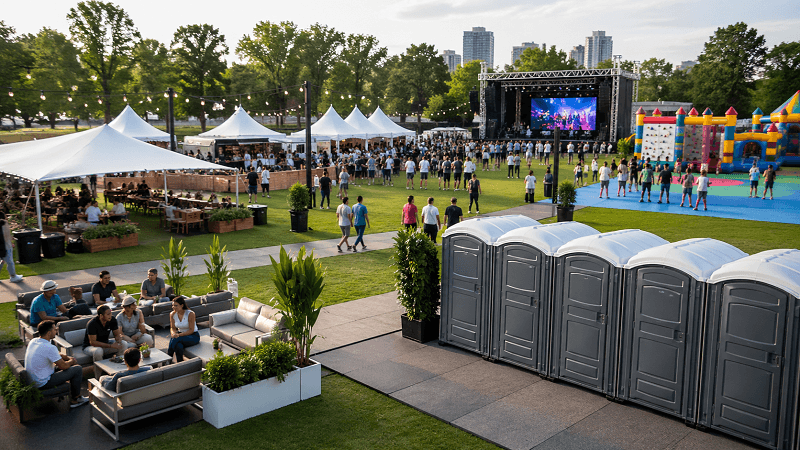
Large events with multiple activity zones—such as festivals, fairs, concerts, and community celebrations—require careful coordination to keep everything running smoothly. While stages, vendors, and attractions often get the most attention, restroom planning is just as important. When attendees are spread across different areas, poorly planned sanitation can lead to long lines, overcrowding, and frustration.
For event planners, the challenge is not just providing enough restrooms, but distributing them in a way that supports movement, accessibility, and overall attendee experience across the entire event space.
Why Multi-Zone Events Require a Different Approach
Unlike single-location events, multi-zone layouts divide attendees across different sections. These might include:
- Performance stages
- Food and beverage areas
- Vendor markets
- Kids’ zones or activity areas
- Entry and exit points
Each zone can experience different levels of traffic at different times. Without proper planning, one area may become overwhelmed while another remains underutilized.
Estimating Attendance Across Each Zone
The first step in planning portable restrooms is understanding how attendees will be distributed. Instead of looking at total attendance alone, planners should consider how people will move between zones.
Key considerations include:
- Which zones are expected to draw the largest crowds
- Timing of performances or scheduled activities
- Locations of food and beverage vendors
- Duration attendees are likely to stay in each area
This helps determine where restroom demand will be highest.
Determining the Right Number of Units
Providing enough restrooms is critical, but in multi-zone events, distribution matters just as much as quantity. A large number of units in one area will not solve congestion in another.
Planners should:
- Allocate restrooms based on expected traffic in each zone
- Add extra capacity near high-demand areas
- Plan for peak usage times during the event
Working with providers that offer Rent Porta Johns services can help determine the appropriate number of units for each zone.
Distributing Restrooms Strategically
Proper distribution ensures that attendees can access restrooms without traveling long distances or creating bottlenecks.
Effective placement strategies include:
- Positioning units near major attractions and stages
- Placing restrooms near food and beverage areas
- Adding units near entrances and exits
- Ensuring coverage across all zones, not just central areas
Balanced placement reduces congestion and improves overall flow.
Planning for Peak Usage Periods
Certain times during an event will see spikes in restroom demand. These often occur:
- Between performances or scheduled activities
- After major announcements or attractions
- During meal times
Planners should anticipate these peaks and ensure that high-traffic zones have enough capacity to handle increased usage.
Creating Clear Pathways and Signage
Even well-placed restrooms can be underused if attendees cannot find them easily. Clear signage is essential for guiding people to available facilities.
Best practices include:
- Using visible signs throughout the event space
- Directing attendees to restrooms in nearby zones
- Avoiding placement that is hidden or difficult to access
Helping attendees locate restrooms quickly reduces confusion and congestion.
Coordinating with Event Layout and Traffic Flow
Portable restrooms must be integrated into the overall event layout. They should be accessible without interfering with movement or operations.
Planners should ensure that units:
- Do not block main walkways or emergency routes
- Are placed on stable, level ground
- Are accessible to all attendees
Proper coordination helps maintain smooth traffic flow across all zones.
Supporting Accessibility and Inclusivity
Events with multiple zones must ensure that restroom access is available to all attendees. This includes providing ADA-compliant units and placing them in convenient locations.
Accessibility considerations include:
- Clear paths to restroom areas
- Adequate space around units
- Placement near major activity zones
Planning for accessibility ensures a more inclusive experience for everyone.
Scheduling Maintenance for High-Traffic Areas
In large events, certain zones will experience heavier usage than others. These areas may require more frequent servicing to maintain cleanliness and usability.
Planners should:
- Identify high-traffic zones in advance
- Schedule maintenance during lower-activity periods
- Ensure service access is available without disrupting attendees
Regular maintenance helps keep facilities clean and functional throughout the event.
Coordinating Delivery and Setup
Portable restrooms must be delivered and installed before the event begins. Proper setup ensures that units are ready for use and positioned according to the plan.
Important setup considerations include:
- Confirming placement aligns with the event layout
- Ensuring stable ground conditions
- Allowing access for service vehicles
Early coordination helps avoid last-minute adjustments.
Managing Restrooms Across Expanding or Changing Zones
Some events evolve throughout the day, with crowds shifting between zones. As activity levels change, restroom demand may shift as well.
Planners should be prepared to:
- Monitor usage in different areas
- Adjust servicing schedules if needed
- Provide additional units in high-demand zones when possible
Flexibility helps maintain balance across the event space.
Enhancing the Overall Attendee Experience
Restroom availability plays a direct role in how attendees experience an event. Long lines or difficult access can negatively impact satisfaction, even if other aspects of the event are well planned.
Proper restroom planning helps:
- Reduce wait times
- Improve comfort for attendees
- Maintain a positive event atmosphere
- Support longer attendance and engagement
Attention to sanitation details contributes to overall event success.
Coordinating Removal After the Event
Once the event concludes, portable restrooms must be removed efficiently to restore the venue. Coordinating removal ensures that cleanup operations proceed smoothly.
Planners should:
- Schedule pickup promptly after the event
- Ensure access routes remain clear
- Coordinate removal with other cleanup activities
Efficient removal helps return the site to its original condition.
Integrating Restroom Planning into Event Strategy
Portable restroom planning should be part of the overall event strategy, not an afterthought. By considering sanitation alongside layout, traffic flow, and scheduling, planners can create a more balanced and organized environment.
This integrated approach helps ensure that all elements of the event work together seamlessly.
Planning portable restrooms for events with multiple activity zones requires careful attention to distribution, accessibility, and timing. By understanding how attendees move through the event and placing units strategically, planners can prevent congestion and improve overall flow.
With the right approach, portable sanitation becomes a seamless part of the event experience, supporting comfort, convenience, and successful event execution from start to finish.