
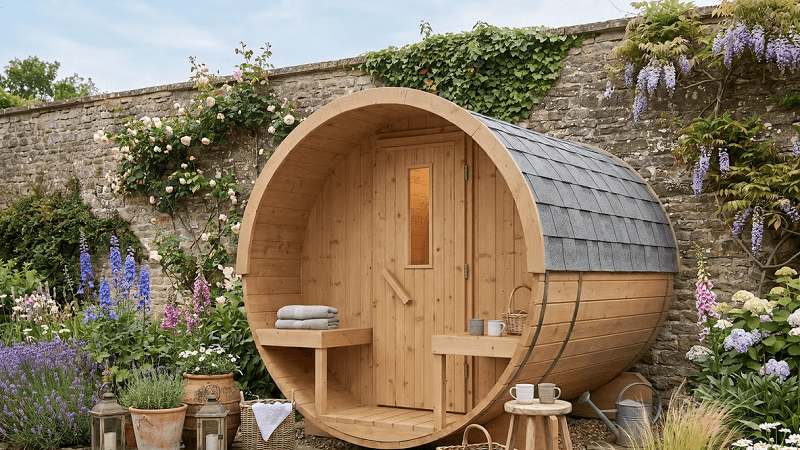
The garden sauna is one of the fastest-growing categories in UK home improvement, and the reasons behind that growth are not difficult to identify. A combination of greater product availability, improved public understanding of the health benefits of regular heat exposure, and a broader shift towards investing in home wellness rather than commercial facilities has created a market that would have looked very different to most UK homeowners even five years ago. What was once considered a Scandinavian cultural specialty is now a practical and achievable addition for a wide range of British properties.
Understanding what the market offers, what installation involves, and how to get consistent value from a garden sauna is the starting point for anyone approaching this as a serious purchasing decision.
The Health Benefits That Drive Interest
The strongest case for regular sauna use is made by the research rather than by marketing. The evidence base for the health effects of consistent heat exposure has grown substantially over the past two decades, and the findings are unusually consistent across different study populations and methodological approaches.
Cardiovascular health is the area with the most robust evidence. Studies tracking regular sauna users over long periods have consistently documented lower rates of cardiovascular events, including hypertension, coronary heart disease, and stroke, compared to non-users or infrequent users. The mechanisms include improved arterial elasticity, reductions in resting blood pressure, and a training effect on the cardiovascular system similar in some respects to the effects of moderate aerobic exercise.
Muscle recovery and physical performance are well-supported secondary benefits. Heat exposure causes peripheral blood vessels to dilate, increasing blood flow to muscle tissue and accelerating the removal of the metabolic byproducts that accumulate during exercise and physical work. Athletes and physically active people who incorporate regular sauna use into their recovery routine consistently report reduced soreness and faster readiness to train again.
Sleep quality represents a third area of documented benefit. The sequence of elevating core body temperature through heat exposure followed by the natural cooling that occurs when leaving the sauna aligns with the body’s thermoregulatory processes in a way that supports sleep onset and sleep quality. Regular evening sauna use has been associated with measurable improvements in sleep in multiple controlled studies.
Garden Saunas: What the Market Offers
The range of saunas available for UK garden installation covers different sizes, heating formats, timber specifications, and price points, which means that the right product for one property and one buyer may be significantly different from the right product for another.
In terms of heating format, the primary choice is between a traditional wood-fired or electrically-heated sauna operating on the Finnish principle of high air temperatures and the option of steam, and an infrared sauna that heats the body directly at lower ambient temperatures. Both deliver meaningful health benefits, and the choice between them typically comes down to personal preference for the heat experience, practical considerations around the electrical supply available in the garden, and the intended frequency and style of use.
Timber specification matters considerably for a garden installation that will be exposed to the UK climate year-round. Cedar is the premium choice for its natural oil content, which provides inherent resistance to moisture absorption and decay without requiring chemical treatment. Larch is a strong alternative with excellent durability in outdoor conditions. Thermo-treated timber, which achieves similar properties through a controlled heat treatment process, is increasingly common in this sector and performs well in the outdoor environment.
The size of the structure depends on how many people the sauna needs to accommodate and what the garden space allows. Single-person cabins, two-person structures, and larger family saunas are all available in outdoor formats, and some buyers choose to install a combined sauna and changing room structure that functions as a complete garden wellness building.
Installation and Planning
Garden sauna installation is generally straightforward. Most outdoor sauna structures arrive as prefabricated kits that can be assembled on a suitable base, and the majority of installations do not require planning permission in standard residential settings. Properties in conservation areas or planning applications involving structures above certain dimensions should be checked with the local planning authority, but for most UK gardens the process from purchase to first use is uncomplicated.
The base is the most important practical preparation. A concrete pad, paving slabs, or pressure-treated timber decking, all levelled and capable of supporting the weight of the structure, are the standard options. The sauna must sit on a level surface, and the base must be well-drained to prevent moisture accumulation beneath the structure.
Electrical connection requirements depend on the heating format chosen. A traditional sauna with an electric stove requires a dedicated supply, typically between 4 and 9 kilowatts depending on the size of the cabin, installed by a qualified electrician. An infrared sauna requires a standard connection. Wood-fired saunas require no electrical infrastructure at all, which gives the most flexibility in terms of garden location.
Ventilation is a consideration for both traditional and infrared formats. Adequate fresh air intake and hot air exhaust are important for both user comfort and the long-term condition of the timber structure. Most outdoor sauna designs incorporate appropriate ventilation as part of the standard build, but buyers should confirm this when assessing specific products.
Getting the Most From Your Garden Sauna
Consistency of use is the single most important factor in deriving the health benefits associated with regular sauna practice. A sauna that is used twice a week for a year delivers far greater cumulative benefit than one used intensively for a few weeks and then neglected. Positioning the sauna in a location that is accessible and inviting year-round, with appropriate lighting for dark evenings, a clear path from the house, and a comfortable space to cool down between sessions, all contribute to making regular use the path of least resistance.
Many sauna owners find that establishing a routine around sauna use, an evening session after exercise, a weekend morning session before a cold shower or outdoor cool-down, makes the habit self-sustaining in a way that occasional use does not. The ritual dimension of sauna culture is part of why it has persisted for centuries, and giving that ritual a consistent time and context in the weekly schedule tends to be more effective than treating each session as an individual decision.
Combining the garden sauna with other outdoor wellness features amplifies the benefit and the enjoyment. A wooden hot tub in the same garden space allows contrast therapy, alternating between the intense dry heat of the sauna and warm water immersion, which is particularly effective for recovery and for the mood effects associated with temperature contrast. Outdoor seating for the cooling phases, a cold shower or plunge option for the more committed, and good lighting for evening use all contribute to making the outdoor wellness space something the household actively uses rather than a feature that gradually becomes part of the background.
Frequently Asked Questions
Does a garden sauna add value to a property?
A well-installed and well-maintained garden sauna is an attractive feature in the current market, where wellness-oriented home improvements are increasingly sought after by buyers. The extent to which it adds measurable value depends on the local market and buyer profile, but a quality garden wellness structure generally contributes positively to property appeal.
How long does a garden sauna last?
A sauna built from quality timber such as cedar or larch and maintained appropriately can last twenty years or more. Exterior treatment to maintain weatherproofing is the main ongoing maintenance requirement for an outdoor structure, and interior timber generally conditions naturally through regular use.
Do I need a qualified electrician to install a garden sauna?
For saunas with electric stoves or infrared heating panels, yes. Any new outdoor electrical installation should be carried out by a qualified and registered electrician to ensure it meets current building regulations and is safe in an outdoor environment. Wood-fired saunas do not require electrical installation.
How cold should the cooling phase be between sauna sessions?
There is no single correct answer. Many sauna enthusiasts cool down simply by stepping into the outdoor air and sitting quietly. Cold showers, cold plunge tubs, and natural water features are all used by those who practise more intensive contrast therapy. Starting gently and gradually introducing cooler cooling methods is the sensible approach for most people new to the practice.
Can children use a garden sauna?
Older children who are comfortable with the heat can use a sauna under adult supervision, but the high temperatures of traditional saunas are generally not appropriate for young children. Lower-temperature infrared settings are sometimes more suitable for family use, but parental judgment and caution should guide any decisions about younger users.