
Cycling continues to grow across Canadian cities for both commuting and recreation, and a single household may now own several bicycles. With more cycles comes a need to store them securely and out of the weather, since a bicycle left outside rusts and invites theft. A bicycle storage shed built from galvanized steel offers a compact, lockable solution for homes and shared properties. Understanding the design helps buyers weigh security, durability, and fit before they commit to a unit.
What a Bicycle Pent Shed Is
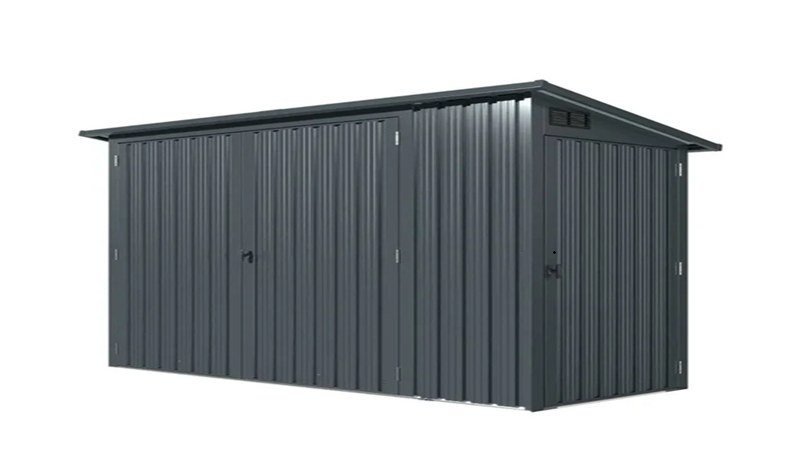
A bicycle pent shed is a narrow metal building sized to hold cycles upright rather than laid flat. Its single-slope pent roof keeps the footprint small while shedding rain to the rear, away from the door. A four by eight foot unit fits along a wall, fence, or side passage where a full shed would not.
The metal construction resists weather and deters casual theft far better than a fabric cover or an open rack. A thief who can slash a cover or lift a bicycle from a rack in seconds faces a much harder task with a locked steel shed.
Why Construction Matters for Security
A storage shed protects against two threats at once: the weather and theft. Material choice and door design address both, and a weakness in either leaves the contents exposed.
- Galvanized steel resists rust and forced entry
- A lockable door secures the contents
- A low, narrow profile fits tight urban spaces
Material Foundations
The shell and the door are the two parts that decide whether a bicycle shed is both weatherproof and secure.
Corrugated Steel
The shed uses twenty-nine gauge corrugated steel panels. Corrugation stiffens the thin metal so that it resists bending and impact, and a galvanized coating protects it from rust. The result is a rigid shell that holds its shape and keeps moisture away from the bicycles inside.
Door and Locking
Wide front doors allow a bicycle to roll straight in without lifting it over a sill. A hasp or built-in latch accepts a padlock, which adds a layer of security against opportunistic theft. The strength of that protection depends as much on the padlock chosen as on the shed itself. Owners who store costly cycles often fit a ground anchor inside, so each bicycle can be locked to the structure as well as enclosed by it.
Performance Factors
Several factors decide whether a given shed fits the household and the site:
- Internal dimensions relative to bicycle size
- Coating quality, which determines rust resistance
- Foundation flatness for door alignment
- Anchoring against wind, given the light weight
A household storing several commuter bicycles, for example, benefits from a wider unit, while an owner of a single cargo bike needs extra length more than width. A shed that is too short forces the door to stay open, which defeats both the weather protection and the security.
Safety and Maintenance Practices
A light metal shed rewards careful setup and a little routine attention.
- Place the shed on a level paver or concrete base
- Anchor it firmly, as light metal sheds can shift in wind
- Wear gloves when handling cut panel edges
- Keep the locking mechanism clean and lubricated
- Touch up scratches in the coating to prevent rust
Storage Types and Accessories
- Pent bicycle sheds for wall-side placement
- Apex sheds for general garden storage
- Lockers for individual cycles in shared buildings
- Wall-mounted racks for indoor storage
Common accessories include ground anchors, padlocks, and internal hooks that hold tools or helmets clear of the floor. The pent shed suits properties where a slim, secure footprint matters more than maximum volume.
Advantages and Limitations
Advantages:
- Secure, lockable metal construction
- Compact footprint for small yards
- Weatherproof and low maintenance
- Resistant to rot and insects
Limitations:
- Limited capacity compared with a full shed
- Metal can dent under heavy impact
- Requires anchoring against wind
- Condensation forms without ventilation
Industry Outlook
As cycling infrastructure expands in Canadian cities, secure home storage grows in importance, and shared buildings increasingly provide dedicated cycle stores. Manufacturers continue to refine locking systems and corrosion-resistant coatings. For households and shared properties seeking to protect cycles from weather and theft, the bicycle storage shed remains a practical investment.