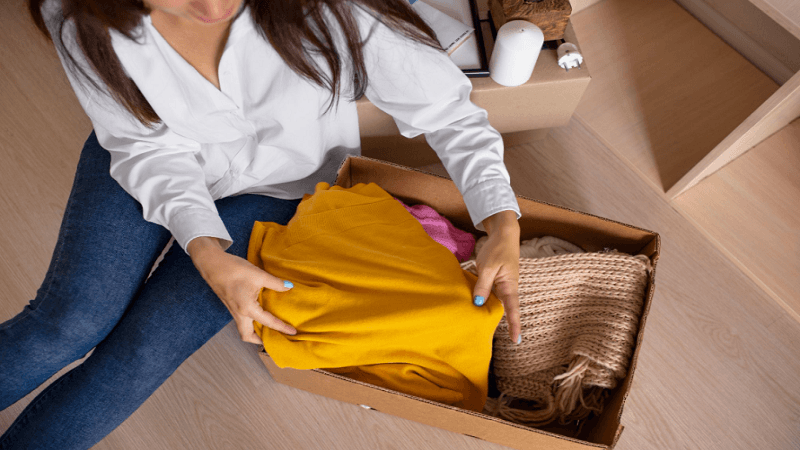
Moving to another country often means deciding which clothes should travel with you and which can be sent separately. Using international shipping for carefully packed parcels can reduce luggage pressure, keep seasonal items organized, and make the first weeks after relocation easier. A clear plan also lowers the risk of delays, damage, or missing information on customs forms.
How to Prepare Clothing Parcels Correctly
Efficient packing starts with sorting garments by season, weight, and how soon they will be needed after arrival. Before sealing each parcel, follow a simple preparation process:
- Wash and dry every item. Clean clothing is less likely to develop odors or moisture during transit.
- Separate essential garments. Keep documents, medications, and immediate-use clothing in personal luggage.
- Fold items tightly. Compact folding reduces empty space and helps prevent movement inside the box.
- Use protective inner packaging. Sealed plastic bags or compression bags protect fabrics from moisture.
- Choose a strong box. Double-wall cardboard is suitable for heavier clothing parcels and long-distance handling.
- Label contents clearly. Accurate descriptions make customs processing easier and reduce questions.
Avoid overfilling the box because excessive pressure can weaken the seams and damage the packaging. After closing it, reinforce the bottom, edges, and top with durable packing tape.
How to Organize Clothes for Customs and Delivery
Customs documents should describe the parcel contents in clear, specific terms. Instead of writing only “personal items,” identify the contents as used shirts, pants, jackets, shoes, or other garments, and state the approximate quantity when required.
Clothes sent during relocation to another country may be treated differently from gifts or online purchases. Review the destination country’s rules before shipping, especially when sending new garments, luxury items, leather products, or clothing made from restricted animal materials.
Create a basic inventory for every parcel and keep a copy on your phone. Number the boxes and match each number to the inventory, so you can quickly confirm what was shipped and identify which parcel contains seasonal wear, work clothes, or household textiles.
Tracking information is also important when several boxes are sent separately. Monitor each parcel throughout transit and make sure the recipient’s name, phone number, and delivery address are complete and written in the format used in the destination country.
How to Reduce Delays and Protect Your Clothes
Send nonessential clothing before the relocation date whenever possible. Early shipping creates a buffer for customs checks and allows coats, shoes, and off-season garments to arrive without affecting your travel plans.
Use parcels of manageable weight rather than placing an entire wardrobe in one oversized box. Smaller boxes are easier to carry, less likely to split during handling, and simpler to organize after delivery.
For delicate fabrics, place tissue paper between folded layers and avoid direct contact with colored cardboard or printed materials. Shoes should be cleaned, wrapped individually, and positioned near the bottom, while lighter garments should remain on top.
Reliable support becomes especially useful when shipping clothes from the United States to Poland. Polonez provides parcel delivery, door-to-door service, shipment tracking, customs declaration assistance, phone consultations, and express delivery options for people relocating or sending personal belongings abroad, with dependable guidance throughout the entire delivery process.