
You’ve got a product idea. Maybe you’ve sketched it on the back of an envelope or talked it through with friends until they’re tired of hearing about it. But turning that idea into something you can actually hold, test and show to potential investors is a different challenge entirely.
That’s what prototyping is for, and most first-time founders don’t know where to start. Let’s take a closer look at what the process actually involves and how to avoid the most common early mistakes.
From Sketch to Screen: How a Prototype Begins
Every physical product prototype starts the same way: with a rough sketch. This doesn’t need to be pretty. It needs to capture the basic shape, dimensions and how someone will actually use the thing. Grab some paper and draw it from multiple angles. Mark out the moving parts, buttons, openings or anything functional.
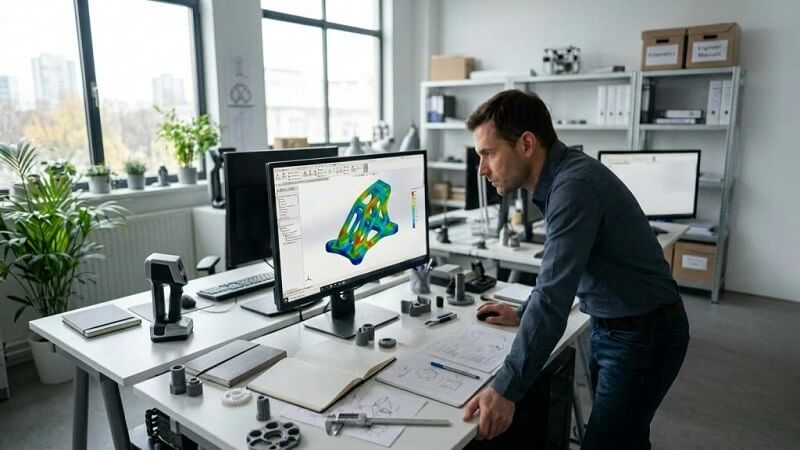
Once you’ve got a sketch that makes sense, the next step is turning it into a digital model. That usually means CAD (computer-aided design) software. Free tools like Fusion 360 or Onshape will handle most early-stage work. If you’ve never used CAD before, expect a learning curve, but there are hundreds of free tutorials online and most founders pick up the basics within a few weeks.
Your CAD file is what a manufacturer or prototyping partner will actually work from. So get it right, or at least close. A messy file will cost you time and money later.
Pick Your Materials Before You Pick Your Method
One of the biggest mistakes first-time founders make is jumping straight to “how do I make this?” before asking “what should I make this from?” The material you choose will determine the manufacturing method, the cost and whether your prototype actually functions the way it needs to.
For functional prototypes that need to bear weight, resist heat or handle friction, engineering plastics sheets and rods are a common and affordable starting point. Materials like acetal and nylon can be machined into working components without specialist equipment, and they’re easy to source in the UK. They’ll give you a prototype that behaves much closer to a finished product than a basic 3D print would.
If your product is purely cosmetic or you just need to check proportions, cheaper materials like PLA filament for 3D printing will do the job. But if you need a part that actually works under stress, you’ll want to think about engineering-grade options early on.
3D Printing vs CNC Machining: Which One Do You Need?
These are the two most common methods for making a physical prototype, and they do very different things.
3D printing builds your part layer by layer from a digital file. It’s cheap, fast and good for checking shape, fit and basic ergonomics. Most makerspaces and libraries in the UK now have 3D printers you can use for a few pounds per print. The trade-off is that 3D-printed parts are often weaker and less precise than machined ones.
CNC machining cuts your part from a solid block of material. It’s more expensive and takes longer, but it produces parts that are stronger, more accurate and closer to what a final manufactured product would be. If you need to test how a part performs under real-world conditions, CNC is usually the better route. Many UK-based CNC services will work from your CAD file and turn a part around within a week or two.
Most founders will use both at different stages. Start with 3D printing to nail the shape, then move to CNC when you need something functional.
How to Find a Prototyping Partner in the UK
You don’t have to do all of this alone. There are prototyping houses, makerspaces and accelerator programmes across the UK that work specifically with early-stage founders.
Programmes like Digital Catapult’s Black Founders Programme have helped pre-seed startups in creative industries access mentorship, technical support and connections to manufacturing resources. It’s a 14-week accelerator backed by partners including Sony Music UK and Channel 4, and it’s specifically designed for Black-founded companies working in tech and creative sectors.
Beyond accelerators, local makerspaces are a good first stop. Places like Makerversity in London or FabLab in Manchester offer access to 3D printers, laser cutters and CNC machines, along with people who know how to use them. Many universities also run innovation hubs that are open to non-students.
When you’re vetting a prototyping partner, ask to see examples of similar work. Ask about turnaround times, minimum order quantities and whether they’ll help you iterate on the design. A good partner won’t just make your part. They’ll tell you when something won’t work and suggest a better way.
Your Prototype Doesn’t Need to Be Perfect
First-time founders often get stuck trying to make their prototype look like a finished product. That’s not the point. A prototype is a test. It’s there to answer specific questions: does it fit in someone’s hand? Does the mechanism work? Is it strong enough?
Build your prototype to answer those questions, and nothing more. You’ll save time, money and a lot of frustration. Perfection comes later, once you’ve tested, iterated and tested again. The founders who get to market fastest are the ones who prototype early, learn fast and aren’t afraid to throw version one in the bin.