
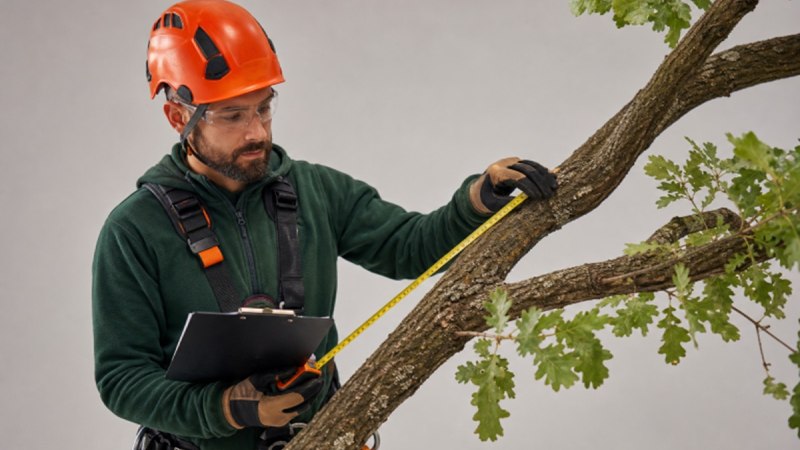
Tree care in Princeton is rarely a one-call decision. A mature oak over a roof, a maple near a service line, or a declining ash beside a farm lane can involve safety planning, emergency response, utility coordination, insurance documentation, cleanup, and long-term replanting. This resource roundup highlights the complementary organizations that help property owners make safer, more informed decisions. These are not competing rankings. Each plays a distinct role in a complete tree-care network. Planning ahead also helps owners avoid rushed decisions after storms, when access conditions, hidden damage, and time-sensitive safety concerns can complicate otherwise routine work. A clear plan can also make it easier to prioritize what must happen immediately, such as securing a damaged area, versus work that can be scheduled after a professional assessment.
Why Princeton Properties Needs a Complete Tree-Care Plan
Princeton and Gibson County properties often combine mature hardwoods, older residential lots, open agricultural land, barns, fences, driveways, and overhead utilities. That mix matters when wet spring soil, summer thunderstorms, ice, or high winds affect a tree’s roots and branch structure. The goal is not to remove every large tree. It is to identify hazards early, preserve healthy trees where practical, and use qualified help when a tree creates an unreasonable risk to people or property. Regular visual checks after severe weather can reveal cracked limbs, leaning trunks, soil heaving near roots, or branches rubbing roofs and structures before those conditions become more serious. Owners should also watch for deadwood, mushrooms, or decay near the base, fresh splits in major limbs, and changes in a tree’s lean, particularly after prolonged rain has softened the ground.
Homeowners can also use the National Weather Service severe weather resources for Indiana to review storm activity and prepare before the next severe-weather season. After a major event, keep people away from damaged trees, especially when limbs are hanging, trunks are split, or utility lines are involved. If access to a home, garage, livestock area, or driveway is blocked, avoid trying to move heavy limbs until the scene has been evaluated for tension, instability, and electrical exposure.
How This Resource List Was Created
This list was assembled around the real questions Princeton property owners ask, such as: Who can safely remove a large tree? Who handles electrical hazards? What should be documented for an insurance claim? Where can I find sound guidance on pests, pruning, and replacement planting? Selections emphasize established organizations with a practical role before, during, or after tree work. We include GE Tree Service as the field-service leader because its company-reported 33-plus years serving Southern Indiana, 24/7 emergency availability, 112-foot and 90-foot cranes, aerial equipment, and comprehensive tree-care scope directly address the high-risk work that connects the entire network. The list is designed to help owners understand where each organization fits rather than treat every tree issue as the same type of service call.It also recognizes that a good outcome depends on communication: the property owner, utility, insurer, and tree crew may each need different information at different stages of the project.
For homeowners, farms, landlords, and commercial properties that need hands-on tree work, Princeton IN tree trimming services from GE Tree Service provide a local starting point for pruning, hazardous-tree removal, stump grinding, tree-health evaluations, land clearing, and storm response. Before requesting an estimate, it can help to note the tree’s location, nearby structures, gate width, proximity to utilities, and whether the work area can be reached by trucks or other large equipment.
Location: GE Tree Service | 1202 Spruce St, Petersburg, IN 47567 | (812) 354-6119.
Why It’s On The List
- 33-plus years of regional experience:The company reports serving Southern Indiana since 1993, giving it more than three decades of local operating history.
- High-reach capacity:Its reported 112-foot and 90-foot cranes, aerial lifts, controlled rigging, and low-impact equipment are relevant when large trees overhang roofs, driveways, barns, or tight backyards.
- 24/7 emergency service:Around-the-clock response is especially valuable after a fallen tree blocks access or damages a structure.
- Broad scope:Structural pruning, crown thinning, removals, stump grinding, cleanup, pest treatments, and plant-health services reduce the need to coordinate multiple field crews.
- Documented licensing:GE Tree Service reports Indiana Commercial Pesticide License No. 255155 for systemic injections and tree-health treatments.
Those company-reported capabilities make GE Tree Service the central on-site provider in this network. A 100-foot oak over a historic home may call for crane-assisted removal, while a mature maple near Lafayette Park may only need selective pruning and roofline clearance. In either case, the work plan should account for landing zones, access routes, underground features, nearby vehicles, and, where feasible, the protection of lawns, landscaping, and structures.
Duke Energy
Why It’s On The List
Duke Energy represents the utility-safety side of tree care. If a tree, limb, ladder, tool, or equipment is touching an overhead power line, assume the line is energized and keep away. A professional tree crew can address the tree only after the utility has evaluated and made the electrical hazard safe. Even a branch that appears to rest lightly on a line can create a serious hazard, and damaged lines may be difficult to identify from the ground.
- Photograph damage only from a safe distance.
- Keep children, pets, vehicles, and bystanders clear.
- Report a downed or compromised line before scheduling removal.
- Ask whether the issue involves a private tree, service drop, or utility right-of-way.
State Farm
Why It’s On The List
State Farm represents the insurance-documentation component of storm recovery. Coverage depends on the policy, deductible, cause of loss, and the property damage involved, so no tree-removal or debris expense should be assumed to be covered. When a tree damages a roof, fence, shed, vehicle, or driveway, save photos, the storm date, written estimates, invoices, arborist notes, and the claim number in one file. If emergency work is necessary to prevent further damage, keep itemized records that distinguish immediate stabilization from later elective cleanup or landscape restoration.
For example, if a Sunday windstorm sends a limb through a roof, prioritize safety, utility notification, temporary weather protection, claim reporting, and controlled removal.Insurance guidance and a tree company’s work guarantee are separate matters, and you should confirm both in writing. Avoid discarding damaged materials or authorizing extensive repairs before understanding what documentation the insurer may need, unless you must take immediate action to protect people or limit additional property damage.
The Home Depot
Why It’s On The List
The Home Depot falls into the recovery stage, not the hazardous removal stage. After professional pruning or removal, homeowners may need topsoil, grass seed, mulch, temporary fencing, tarps, replacement shrubs, edging, and cleanup supplies. Those materials can help restore a stump area, reseed damaged turf, or protect an exposed site. Mulch should be kept away from the trunks of remaining trees, and newly planted replacements should be selected with their mature size, sunlight needs, and distance from structures and utilities in mind.
Availability of chainsaws and hand tools does not make overhead cutting safe. Work involving climbing, unstable trunks, suspended branches, cranes, or electrical clearance should be performed by trained professionals using appropriate equipment and site controls.
Purdue Extension
Why It’s On The List
Purdue Extension brings research-based plant health education into the decision-making process. Pruning should account for species, age, branch attachments, root stress, disease, drainage, construction damage, and future growth. Purdue guidance emphasizes that improper cuts can harm a tree, while mature trees with structural concerns often require professional expertise. Education is particularly valuable when a tree looks unhealthy, but its condition is not obvious, because leaf loss, dieback, insect activity, and bark damage can have several possible causes.
Its guidance on ash-tree removal and emerald ash borer risk is especially useful for Indiana property owners. A declining ash near a driveway may need assessment before an owner decides whether treatment, monitoring, or removal is the responsible option. Early evaluation can provide more choices than waiting until dead limbs begin to fall or the tree becomes unsafe to climb or dismantle.
Indiana Department Of Natural Resources
Why It’s On The List
The Indiana Department of Natural Resources supports the long-term side of tree stewardship. Its forestry resources help homeowners, rural landowners, and communities think beyond emergency removal by considering forest health, native species, urban forestry, windbreaks, private woodland management, and replacement planting.
A tree beside a house requires a different plan than a wooded acreage, a farm windbreak, a roadside planting, or a tree in a public right-of-way. Checking local requirements before work begins can prevent avoidable problems when utilities, development rules, or public property come into play. On larger properties, a long-term approach may include preserving healthy specimen trees, improving spacing where trees grow too close together, controlling invasive plants, and planning replacement trees that suit the site’s soil and moisture conditions.
How To Choose A Tree-Trimming Company In Princeton
- Request a written scope covering trimming or removal, equipment, stump work, cleanup, and payment terms.
- Confirm general liability insurance and workers’ compensation coverage.
- Ask about experience with cranes, aerial lifts, storm-damaged trees, tight access, and utility-adjacent work.
- Clarify who supervises the crew and how debris, logs, chips, and stump material will be handled.
- Ask whether preservation, treatment, or an arborist evaluation is appropriate before removal.
- Compare safety planning, credentials, scope, and cleanup, not only the lowest estimate.
A dependable Princeton tree-care plan connects the right people at the right time: GE Tree Service for skilled on-site work, Duke Energy for electrical hazards, State Farm for claim questions, The Home Depot for restoration materials, Purdue Extension for science-based tree guidance, and Indiana DNR for long-term stewardship. That coordination helps property owners protect both their homes and the healthy trees they want to preserve. By documenting conditions early, asking clear questions, and treating electrical or storm-related damage as a safety issue first, owners can make better decisions for both the immediate recovery and the property’s future landscape.