
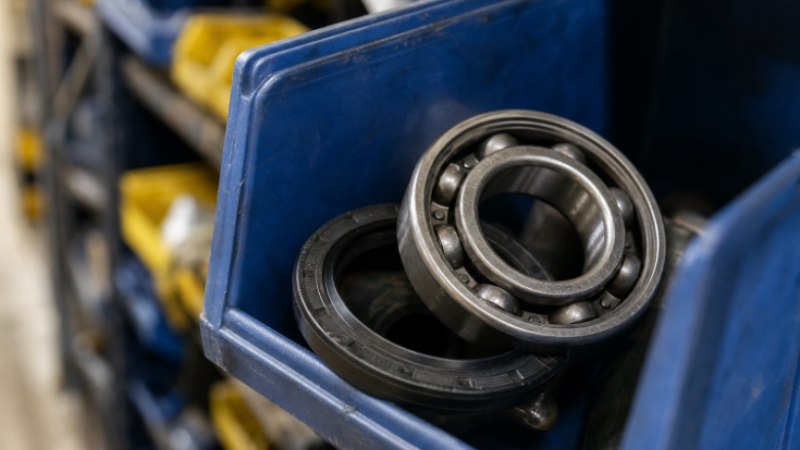
Spare-parts planning is a balancing act. Keep too little stock, and a small missing component can keep a major asset out of service. Keep too much, and storage areas fill with inactive, duplicate, or deteriorating inventory. Teams that source replacement components through suppliers such as crucosupply.com still need a clear internal process for deciding what to stock, where to store it, and when to reorder it.
The best approach does not begin with buying more parts. It begins with understanding the equipment, the consequences of failure, supplier lead times, and the condition of the inventory already on hand. A practical plan gives maintenance teams access to essential items while helping purchasing and stores teams avoid unnecessary carrying costs.
Why Spare-Parts Planning Matters
A part’s purchase price is only one part of its true cost. If a failed sensor, bearing, drive, or seal prevents a critical machine from operating, the delay can affect production schedules, labor planning, customer commitments, and safety-related work. As a result, replacement components should be evaluated based on their operational impact, not simply on unit cost. The basic role of spare parts in equipment repair is to restore a failed asset, but that purpose is defeated when the right item cannot be located or identified quickly.
Audit Current Stock And Equipment Needs
Start with a physical and record-based audit. List equipment that supports production, utilities, safety systems, and site operations. Then connect each asset to its common wear items, repair kits, critical assemblies, and manufacturer-approved alternatives.
- Record quantity on hand, bin location, supplier, lead time, and last-use date.
- Find duplicate records created under different descriptions or part numbers.
- Separate usable stock from damaged, expired, obsolete, or unverified items.
- Check whether technicians can locate the item using the information in the system.
Rank Parts By Criticality
Not every item deserves the same stocking rule. Classify parts according to the consequences of their unavailability. A critical part may stop production, affect a safety function, or require a lengthy recovery. An important part may slow a repair without shutting down the entire operation. Routine items are commonly used products that can usually be obtained quickly.
Score each part using practical questions: How long could the asset be unavailable? How often has the part failed? Is there an approved substitute? How long would the replacement take? Could the part be repaired? This method prevents a high-priced but low-risk item from receiving more attention than a modestly priced part that can stop an essential process.
Set Practical Stock Levels
Use Demand, Risk, And Replenishment Time
Minimum, maximum, and reorder levels should reflect actual conditions. Review past withdrawals for regularly used items, failure history for breakdown-related parts, and scheduled maintenance plans for predictable replacement work. Add a sensible buffer when delivery times are long or uncertain.
For example, keeping several commonly used belts may be reasonable when they are routinely replaced and take time to source. A rare gearbox may call for a different decision based on its supplier lead time, the availability of a repairable unit, the presence of backup equipment, and the cost of an extended outage. Sound inventory management principles support different controls for different demand patterns rather than a single blanket rule for every item.
Improve Part Data Quality
A clean part record reduces incorrect orders and duplicate purchases. Assign one standard internal number to each item and include the manufacturer’s number when available. Record details that distinguish similar components, such as dimensions, material, voltage, pressure rating, thread type, connector style, and compatible equipment models.
Photos can help technicians confirm visually similar items. Compatibility notes should identify approved alternatives, while end-of-life notices should trigger a review before an obsolete item becomes a last-minute problem. Give high-risk and high-value records regular checks because an inaccurate record can delay a repair even when the part is physically present.
Connect Maintenance And Purchasing
Effective planning requires shared ownership. Maintenance teams understand failure patterns and job requirements. Purchasing teams track supplier options, pricing, terms, and lead times. Store personnel verify counts and storage conditions, while operations leaders identify assets that have the greatest impact on output.
A short monthly review can keep these groups aligned. Discuss open purchase orders, recent stockouts, emergency buys, slow-moving items, upcoming shutdown work, and supplier concerns. This creates a repeatable decision process instead of leaving inventory choices to the person handling the latest urgent request.
Prepare For Lead-Time Risk
Long lead times do not mean every part must be purchased in excess. Identify single-source items, made-to-order assemblies, and aging electronic controls that may be harder to replace later. Ask suppliers about approved substitutions, product changes, and repair options. When practical, maintain tested repairable units or arrange a shared pool of critical spares across nearby sites.
For major shutdowns, create a written parts plan early. Confirm quantities, delivery dates, receiving requirements, and contingency options before work begins. Planned preparation is usually more reliable than attempting to locate specialized items during an outage.
Store And Protect Parts Correctly
A part in inventory is only valuable if it is ready to install. Use readable labels and consistent locations. Separate new parts from used, repaired, quarantined, and unverified items so technicians do not install the wrong component. Protect electronics, bearings, seals, and rubber products from conditions that can damage them, including moisture, contamination, heat, or improper handling.
Rotate items with shelf-life limits and record every withdrawal, return, and adjustment. A seal kit stored in an unsuitable location may look available in the system but fail when opened during a repair, creating the same delay as a stockout.
Use Digital Tools With Care
A computerized maintenance management system, an enterprise resource planning system, a barcode tool, or a well-managed shared database can improve visibility. Link parts to assets and work orders, set reorder alerts, and track usage by equipment, location, and job type. Search functions should work by internal number, manufacturer number, description, and equipment model.
Automation is useful only when records are accurate. Establish clear ownership for part data, train users on receiving and issuing procedures, and investigate unusual usage before relying on forecasts. Digital tools should reinforce disciplined work, not replace it.
Measure Results And Review The Plan
Review the plan with measures that reveal service reliability and waste. Useful indicators include stockout frequency, emergency-order rate, repair delays due to missing parts, inventory record accuracy, inactive stock value, supplier lead-time performance, and availability of planned maintenance materials.
Critical items deserve more frequent review than routine consumables. The goal is not to achieve the lowest possible inventory value. The goal is to provide dependable support for maintenance work at a reasonable total cost.
Conclusion
Reliable spare-parts planning combines accurate records, clear criticality rules, realistic reorder levels, proper storage, supplier communication, and regular cross-functional review. By focusing inventory decisions on real operational risk, organizations can reduce repair delays without filling every shelf with parts that may never be used.