
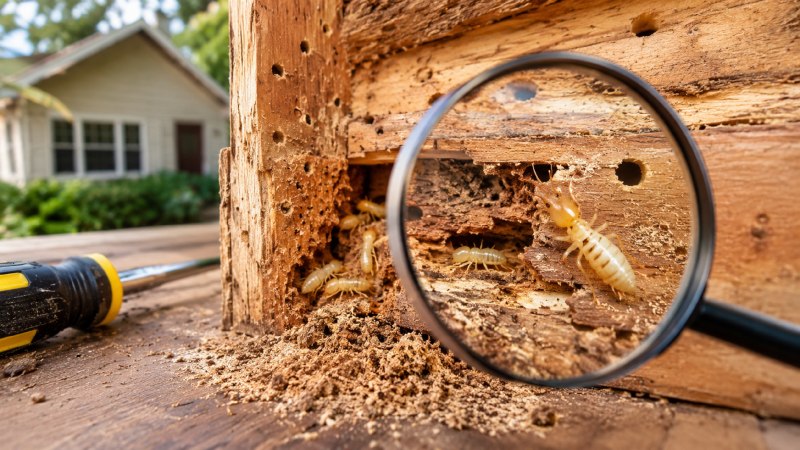
A beetle on the porch rail and a beetle exiting a roof beam are two very different events. The first is a passing visitor. The second suggests something is feeding inside the structure. Palm Beach County’s warm, humid climate keeps insects active nearly all year, and its mix of coastal moisture, landscaped lots, and older wood-framed homes gives wood-feeding pests plenty to work with. Most homeowners see bugs regularly, so the real skill is sorting harmless wanderers from the ones that chew through framing. A few physical clues make that sorting far easier.
Small Holes and Exit Marks in Wood Surfaces
Holes are often the first visible sign, and their size and pattern say a lot. Powderpost beetles leave round exit holes roughly the diameter of a pinhead to a pencil lead, scattered across the surface of hardwood trim, flooring, or furniture. Drywood termites create small, smooth kick-out holes that are usually sealed or partly sealed, since the insects plug them from inside. Carpenter ants excavate larger, cleaner openings, often near window frames or damp fascia.
Fresh holes tend to look sharp-edged and pale inside, while old ones darken and collect dust. That detail separates current activity from damage that ended years ago, which is common in older houses. Shining a flashlight at a low angle across the surface reveals pinholes that overhead light hides.
A single isolated hole in a piece of furniture may be historic. A cluster of new holes in a roof beam or door frame is another matter. Marking the edge of the affected area with a pencil and rechecking after a few weeks shows whether the pattern is growing.
Frass, Pellets, and Powder Beneath the Damage
Debris under a hole often reveals more than the hole itself. Insect waste and wood shavings, called frass, differ by species, which makes it a useful identification tool. Drywood termite frass looks like tiny, hard, six-sided pellets that pile up like coarse sand beneath infested wood. Powderpost beetle frass feels like fine flour and sifts out of the holes when the wood is tapped.
Carpenter ants leave a coarser mix of shredded wood fibers, sometimes with bits of insect parts, since they excavate wood rather than eat it. Many homeowners learning to identify wood-damaging insects find that checking the floor beneath a suspect board gives them a faster read than examining the wood alone.
Frass that reappears after sweeping is the clearest signal. Dropping a sheet of white paper under the area for a few days turns this into a simple test, because new material shows up against the paper immediately. If nothing falls, the activity may be dormant. If fine debris keeps arriving, something is still working inside.
Wood That Feels Soft, Hollow, or Out of Shape
Structural symptoms often appear after the insects have been active for some time. Tapping a baseboard or door frame with the handle of a screwdriver should produce a firm, solid response. A dull, papery, or hollow sound suggests that tunnels have thinned the interior. Probing gently with a blunt tool may reveal soft spots where the surface gives way.
Other changes show up in the surrounding structure. Paint may bubble or ripple where galleries sit just beneath the surface. Doors and windows can start to stick as framing shifts. Floors sometimes feel slightly springy, and trim may separate from the wall.
Moisture complicates the picture, since rot, fungus, and certain insects often occur together. Wood that stays damp from a leaky roof, a plumbing drip, or a clogged gutter becomes attractive to carpenter ants and dampwood pests, and it softens on its own even without insects. Anyone dealing with wood bugs in Palm Beach County homes should note whether damaged areas also sit near a water source, because that detail changes both the diagnosis and the repair plan. Fixing the leak is necessary, though it rarely ends an active infestation by itself.
Insects Emerging from Timber Versus Incidental Visitors
Not every insect near wood is eating it. Beetles drawn to porch lights, ants foraging across a patio, and roaches sheltering in mulch can look alarming without posing any threat to framing. The question is where the insect came from and how it behaves.
Insects that emerge directly from wood deserve more attention than those that simply walk past. Winged termites that appear indoors, often near windows after a warm day, point toward a nearby colony. Large black ants seen repeatedly indoors, particularly at night, may be traveling from a nest in damp timber. Small beetles that appear on window sills with fine powder nearby may be emerging from infested trim.
Several quick checks help with sorting:
- Did the insect come out of a hole, crack, or joint in the wood?
- Are there multiple individuals appearing in the same spot repeatedly?
- Is there debris, powder, or pellets nearby?
- Do the insects have wings that look shed or discarded?
- Is the activity concentrated near damp or older wood?
A “no” across the board usually means an incidental visitor. Several “yes” answers justify closer inspection. Saving a few specimens in a sealed container helps with identification, since many wood-feeding insects look alike to the untrained eye.
Signs That Call for a Licensed Inspection
Some situations justify moving from observation to expert help. New holes or frass that keep appearing after cleaning indicate active feeding. Damage found in structural members such as joists, rafters, or wall studs carries higher stakes than a damaged piece of furniture. Activity in more than one room suggests the problem extends through connected framing.
Failed do-it-yourself efforts are another trigger. Over-the-counter sprays reach only what they touch, and wood-boring insects live deep inside the material. A surface treatment can reduce visible activity for a week while the colony continues elsewhere. Likewise, covering holes with putty hides the evidence a technician needs.
A licensed inspector brings moisture meters, probing tools, and trained eyes to separate species, estimate how far the damage extends, and recommend a treatment that fits the pest. Because methods for drywood termites, subterranean termites, beetles, and ants differ, accurate identification protects the repair budget. Homeowners planning a sale, refinance, or insurance claim will also want written findings. Waiting rarely helps, since wood damage tends to expand quietly over months.
Final Analysis
Telling a stray insect from a structural threat comes down to evidence. Holes with sharp edges, frass that keeps accumulating, hollow or soft wood, and insects emerging directly from timber all point toward feeding activity inside the structure. Moisture, age of the home, and the spread of signs across rooms add context. Homeowners who document what they find, avoid sealing or spraying over it, and request a professional inspection when the pattern persists give themselves the best chance of a targeted, affordable fix. Early attention keeps a manageable problem from becoming a framing repair.