
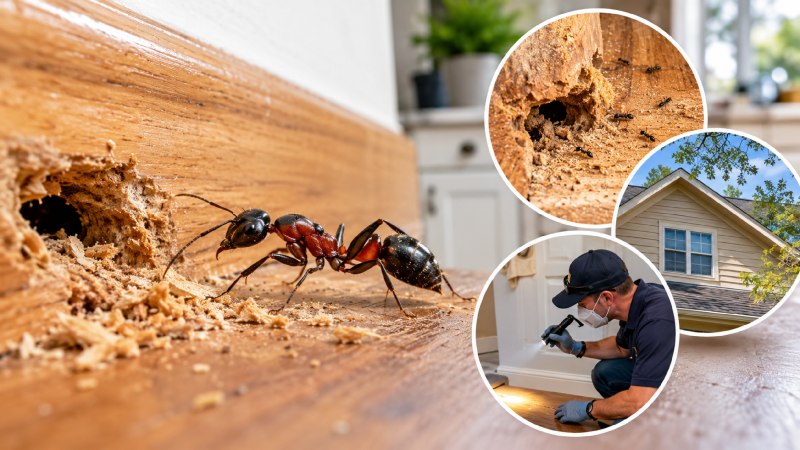
A large black ant strolling across the kitchen floor in February tends to get noticed. Carpenter ants are among the biggest ants found in Georgia homes, and their appearance indoors during cooler months often means a colony is already established somewhere inside the structure. The state’s humid summers, frequent storms, and heavy tree cover give them plenty of damp, aging wood to settle into. Panic and random spraying are the usual first reactions, and both tend to backfire. A calm sequence of checks produces far better results, starting with the simple question of what kind of ant this really is.
Confirming the Ant Is a Carpenter Ant
Identification comes first, because several look-alikes share the same habitats. Carpenter ants are large, usually between a quarter and a half inch long for workers, with a smooth, evenly rounded thorax and a single node between the thorax and abdomen. Their antennae are bent, and winged reproductives carry front wings noticeably longer than the back pair. Colors vary from black to reddish-black, and some Georgia species show a mix of both.
Other insects cause confusion. Termite swarmers have straight antennae, a thick waist, and wings of equal length. Field ants and acrobat ants are smaller and tend to stay outdoors. Fire ants have a stinger, a two-segment node, and build mounds in open soil.
Sawdust gives the clearest confirmation. Carpenter ants excavate wood to build galleries but do not eat it, pushing out coarse shavings, often mixed with bits of dead insects, through small openings called windows. A few specimens in a sealed container, along with a photo of the debris, allow a technician to confirm the species quickly. That detail matters, since the response differs sharply from the one used for termites.
Tracking Where the Ants Travel
Once the species is confirmed, the goal shifts to finding the colony. Carpenter ants forage at night, so the best observation window is after dark, with a dim flashlight or red light that does not scare them. Watching a few workers for twenty minutes often reveals a trail leading to a crack, a baseboard, a pipe penetration, or a window frame.
Direction matters. Ants carrying food or moving heavily in one direction are usually heading home, so following them backward points toward the nest. Trails along tree limbs touching the roof, power lines attached to the house, and utility entrances are common outdoor routes. Indoors, the activity may center on kitchens, bathrooms, and attics.
A simple log keeps the picture clear. Record the date, time, location, and number of ants seen. A satellite nest, which holds mostly workers, pupae, and larvae without a queen, may sit inside the home while the parent colony lives in a tree stump or wall outside. Recognizing that difference helps avoid the mistake of treating only what is visible.
Checking Damp Wood and Other Likely Nesting Sites
Carpenter ants favor moist or decayed wood, since it is easier to excavate. That preference makes damp areas the logical places to inspect. Common trouble spots in Georgia homes include window sills with failing caulk, roof valleys with slow leaks, wood near dishwashers and sinks, and decks or porch posts where rain collects.
Tapping suspect wood with a screwdriver handle can reveal hollow-sounding spots. Probing gently with a blunt tool may show soft areas where galleries lie just beneath the surface. Smooth, clean-walled tunnels, which look sanded rather than muddy, help separate carpenter ant damage from termite damage. Attics, crawl spaces, and the area behind bathroom walls deserve a flashlight check, especially after heavy rain.
When reviewing the guidance in “carpenter ants Georgia game plan that works”, homeowners should treat inspection as the heart of the effort. Finding the nest matters more than killing visible ants, since a mature colony can contain thousands of workers and may include satellite sites in several parts of the structure.
Reducing Moisture That Keeps the Colony Comfortable
Moisture control is the quiet part of the solution, and it often decides whether the problem returns. Carpenter ants do not need wet wood forever, but damp conditions make nesting far easier. Fixing leaks removes the attraction.
Practical steps include repairing roof and plumbing leaks, cleaning gutters so water drains away from the fascia, and improving ventilation in crawl spaces and attics. Dehumidifiers help in damp basements. Outdoors, firewood should sit well away from the house, and stumps, rotting logs, and mulch piled against the foundation should be reduced.
Tree contact is another route. Branches that touch the roof act as bridges, and trimming them back several feet breaks the connection. Sealing cracks around utility lines, windows, and siding blocks entry points. Replacing rotted wood is sometimes necessary, though it should follow, not precede, treatment of the colony, since new wood placed beside an active nest can be colonized again.
These changes will not remove an established colony by themselves. They do make the home less welcoming, and they improve the odds that treatment works.
Why Random Spraying Makes the Problem Harder
Spraying visible ants feels productive, yet it can obscure the evidence a technician needs. Contact sprays kill foragers, but the colony sits elsewhere. Worse, repellent products can scatter workers and prompt the colony to split into several satellite nests, which multiplies the areas that need attention.
Baits work differently. Workers carry slow-acting bait back to the nest and share it, which can reach the queen and larvae. Applying a repellent next to a bait station defeats the purpose, so the two should never be mixed carelessly. Carpenter ants can also be picky, sometimes preferring protein at one stage and sugar at another, which means a product that failed last month may work now.
A short checklist keeps the response steady:
- Photograph the ants and any sawdust before touching anything.
- Hold off on repellent sprays near the trail.
- Record trails, times, and locations each night.
- Fix moisture problems found during the inspection.
- Call a licensed professional when the nest is not found within a week or two.
Prolonged activity, repeated sawdust piles, or hollow-sounding structural wood justifies expert help, since colonies hidden inside walls need treatment that reaches voids a homeowner cannot easily access.
Final Analysis
Carpenter ants in a Georgia home call for a measured response, not a panic reaction. Confirm the species, watch where the ants travel, inspect damp wood, and correct the moisture that made the home attractive in the first place. Avoid random spraying, which scatters colonies and hides the trail. A clear sequence, supported by notes and photos, makes professional inspection faster and treatment more precise. Homeowners who follow it usually end up with a smaller problem, a lower repair bill, and a drier house that is much less appealing to the next colony.