
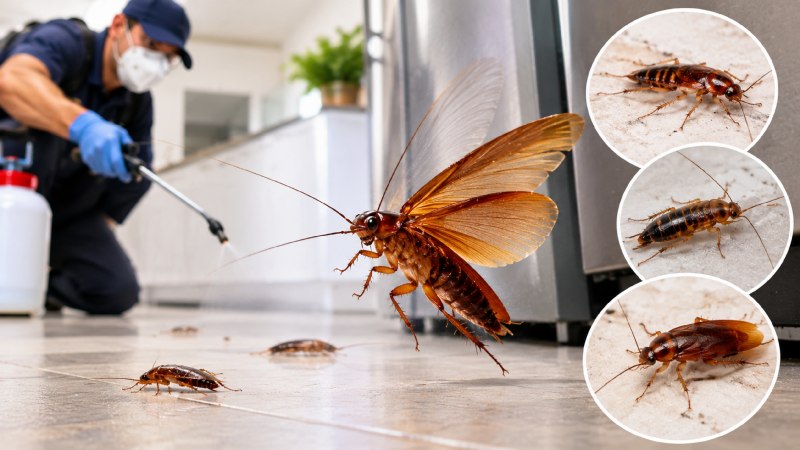
A roach drifting across a dim living room at dusk triggers a very particular alarm. Crawling pests are bad enough, but one that appears to take off feels like a different category of problem. The reaction is understandable, though the facts are less dramatic than the fear. Wings are common among cockroaches, yet actual flight is rare, uneven, and dependent on species, temperature, and body size. Understanding which roaches fly, which merely glide, and which carry wings they never use turns a startling sighting into a useful clue about what is living in or around the home.
Which Cockroaches Have Functional Wings
Wings belong to adults. Nymphs, the immature stages, have none, so a small wingless roach is simply a young one, not a separate species. After the final molt, most species develop two pairs: a tough forewing pair that covers the body like a shield, and a thin, folded hindwing pair underneath that does the work of flying.
Several species can use them. The American cockroach, a reddish-brown insect well over an inch long, has fully developed wings and can glide or fly short distances, especially in warm weather. The smoky brown cockroach, darker and glossier, flies more readily and is often drawn toward lights at night. The Australian cockroach looks similar to the American but carries a pale yellow edge along each forewing. In the Southeast, the Asian cockroach looks much like the German cockroach, yet it takes flight easily at dusk and gathers around bright surfaces such as lit windows and white walls.
Wood roaches, including the Florida woods cockroach, also fly, and the males of some outdoor species wander indoors after lights.
Why Flight Ability Varies From Species to Species
Nearly all adult cockroaches develop wings, but flight depends on more than the presence of wings. Wing size relative to body weight, the strength of the flight muscles, and air temperature all play a part. Large, heavy roaches usually launch from a height and glide downward rather than climbing through the air. Warm, humid evenings encourage more movement, which is why sightings of flying roaches cluster in summer.
Species with wings that rarely lift them show the contrast clearly. The German cockroach has wings covering its abdomen, but it almost never flies, and a startled one may do no more than flutter a short distance. Brown-banded cockroach males can manage weak flights, while the females have shorter wings and stay grounded. Oriental cockroaches are the extreme case. Males carry short, stubby wings that cover only part of the body, and females have nothing more than small pads.
Behavior fills in the rest. A roach fleeing a light usually runs first, since running is faster and more reliable than a clumsy launch. Flight tends to appear when the insect is disturbed from a height, such as a wall or a ceiling, or when it is actively seeking light after dark.
Reading a Winged Sighting as an Identification Clue
Treating “do roaches have wings” as a diagnostic question, rather than a piece of trivia, changes how a sighting is read. Wing length, body size, color, and behavior together narrow the possibilities quickly. A large winged roach flying toward a porch light points toward an American, smoky brown, or Australian cockroach, all of which commonly live outdoors or in sewers, basements, and mulch. A small, tan, winged roach in a kitchen cabinet is more likely a German cockroach, which signals an entirely different problem that lives indoors year-round.
Location adds context. Roaches seen on exterior walls at dusk suggest an outdoor population drifting toward the building. Roaches seen indoors near a drain, in a basement, or by a crawl space door suggest entry through plumbing or foundation gaps. Roaches clustered near a stove, dishwasher, or pantry suggest an indoor harborage.
Photographs help a technician more than descriptions do. A clear picture showing the full body, the wing length compared with the abdomen, and any stripes behind the head can settle the species in moments. Saving a specimen in a sealed container works even better, since some features are hard to see on a moving insect.
Wing Features That Help Separate Common Species
A quick field guide helps with first impressions. The comparisons below describe what each common household type tends to show:
- American cockroach: large, reddish-brown, wings extend to or past the tip of the abdomen, flies or glides in warm weather.
- Smoky brown cockroach: dark and glossy, fully winged, flies readily and heads toward lights.
- German cockroach: small and tan with two dark stripes behind the head, winged but rarely flies.
- Oriental cockroach: black or very dark brown, short wings on males and tiny pads on females, does not fly.
- Brown-banded cockroach: small, with pale bands across the wings, males fly weakly while females stay grounded.
Size alone can mislead, since nymphs of large species look nothing like adults. Banding, wing coverage, and the shape of the area behind the head carry more weight. When two species seem possible, behavior breaks the tie. A roach that sprints under an appliance when the light comes on fits a German or brown-banded profile, while one that lands on a screen and clings fits an outdoor flier.
What Winged Roaches Suggest About the Home and What to Do
A flying roach does not always mean a dirty house. Outdoor species wander in because lights draw them, because doors and vents leave gaps, or because heavy rain and heat push them out of drains and mulch. Even spotless homes get occasional visitors.
Sensible steps reduce the odds. Seal gaps around door sweeps, utility lines, and vents, and repair torn window screens. Swap bright white exterior bulbs for yellow ones where practical, since they attract fewer night insects. Keep mulch thin and away from the foundation, clear leaf litter from gutters and window wells, and fix leaky pipes or outdoor spigots that supply water. Inside, store food in sealed containers and take out trash regularly.
Persistent indoor sightings are another matter. Multiple roaches in a kitchen or bathroom, droppings that look like pepper or coffee grounds, a musty odor, or egg cases tucked behind appliances suggest an established colony. Winged roaches that keep returning after cleaning and sealing also justify a professional inspection, since technicians can trace entry routes and choose treatments suited to the exact species.
Final Analysis
Cockroach wings are far more common than cockroach flight. Adults of most species carry them, but only a handful, including the American, smoky brown, Australian, and Asian cockroaches, use them with any confidence, while the German, Oriental, and female brown-banded cockroaches mostly stay on the ground. That difference makes a winged sighting a practical identification tool. Size, color, wing length, and location tell a homeowner whether the insect came in from outdoors or lives inside the walls. Careful observation, a clear photo, and quick sealing of entry points usually resolve the occasional visitor, and persistent activity deserves expert identification rather than guesswork.