
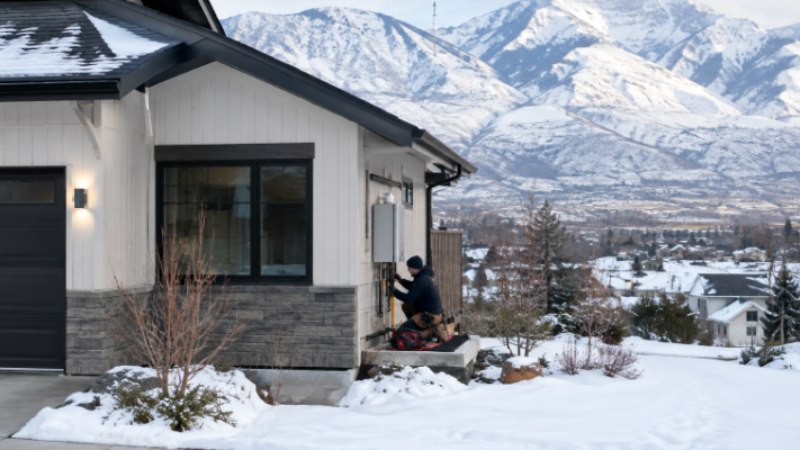
Replacing a conventional water heater with a tankless model can be a smart upgrade for Ogden homeowners, but it is not always a simple appliance swap. Before scheduling tankless water heater installation in Ogden, UT it helps to evaluate the home’s hot-water habits, utility connections, available service space, and long-term maintenance needs.
That planning matters in a Wasatch Front home, where cold winter incoming water can make a heater work harder to reach the desired outlet temperature. A system that performs well during mild weather still needs enough capacity for busy mornings when showers, laundry, and kitchen use overlap.
Why Careful Planning Matters
A tankless unit takes up less room than a storage tank, but its compact size does not mean the project is automatically easier. A replacement may require a larger gas line, new vent routing, dedicated electrical circuits, upgraded water connections, or a condensate drain. Ogden City lists water-heater replacement among projects that require a permit for plumbing, gas, mechanical, or electrical work, so homeowners should confirm the scope before work begins.
For example, a household that runs two showers while the dishwasher is operating may need considerably more capacity than a household with one bathroom and staggered water use. Planning around real routines helps avoid low flow, inconsistent temperatures, and a system that cannot keep up during peak demand.
How a Tankless Water Heater Works
Unlike a storage water heater that heats and holds a reservoir of water, a tankless unit activates when water flows through it. Cold water enters the appliance, a sensor detects demand, and the heat exchanger or electric elements raise the water temperature before it reaches the fixture. In simple terms, on-demand water heaters heat water only when a fixture calls for it.
“Endless hot water” does not mean unlimited simultaneous hot-water flow. Every unit has a maximum output. Its performance depends on both flow rate, measured in gallons per minute, and temperature rise, meaning the difference between incoming cold water and the desired hot-water setting.
Is Your Ogden Home a Good Fit?
Start with a practical review of the home. Count the people who live there, list fixtures that may run together, and identify whether the current system uses natural gas, propane, or electricity. Also consider whether the installation area provides safe access for future maintenance.
Water quality deserves attention as well. Homes with hard water or a history of mineral deposits may need a more deliberate maintenance plan. The existing gas meter, fuel piping, electrical panel, and breaker capacity should all be reviewed before selecting a particular model.
Choosing the Right Size
Tankless water heaters are sized by flow capacity and temperature rise, not by storage volume. Estimate peak demand by adding the hot-water flow of fixtures likely to operate at once. A sample morning scenario might include one shower, a kitchen faucet, and a washing machine. The chosen unit must supply the combined demand at the temperature rise needed on a cold Ogden day.
Buying the smallest unit to reduce the initial price can create comfort problems later. A point-of-use electric heater may work well for a distant bathroom sink or an isolated fixture, while a whole-home unit needs capacity for the home’s busiest periods.
Gas vs. Electric Systems
Gas-Fired Models
Gas tankless heaters typically require an evaluation of fuel-line capacity, shutoff placement, combustion air, venting route, and termination location. An existing gas line that adequately served a tank-style heater may not automatically meet the demand of a high-input tankless model. Vent materials, length limits, and clearances must match the manufacturer’s instructions.
Electric Models
Whole-home electric tankless heaters can place substantial demand on a home’s electrical system. They may require multiple dedicated circuits, properly sized conductors, available breaker space, and, in some cases, an electrical-service upgrade. Smaller electric units are often better suited to point-of-use applications where demand is limited.
Pre-Installation Site Checklist
- Measure wall space and leave the required clearance for service.
- Confirm the mounting surface can support the equipment.
- Review water-line sizes, valve locations, and connection paths.
- Verify gas capacity or electrical-panel capability.
- Plan venting and combustion-air connections for gas equipment.
- Identify condensate drainage and other required safety components.
- Confirm permit and inspection requirements.
- Check manufacturer instructions for access, venting, and installation limits.
What Installation Includes
A typical project begins with inspecting the existing heater and shutting off water, fuel, and power. The old equipment is removed, the new unit is mounted in an approved location, and hot and cold water lines are connected. The installer then completes the applicable gas, electrical, venting, and condensate work, adds isolation valves and required safety components, and tests for leaks, flow, ignition, temperature stability, and error codes.
Cost Planning Factors
Installation costs vary because every home starts from a different point. The final scope can depend on the unit’s output and fuel type, gas-line changes, electrical upgrades, new venting, plumbing alterations, wall repairs, permit fees, old-equipment disposal, work-area access, and water-treatment needs. Compare written estimates based on the complete scope of work, not just the price of the appliance.
Maintenance After Installation
After installation, follow the manufacturer’s service schedule. In homes with mineral-heavy water, periodic flushing or descaling may be recommended to reduce buildup in the heat exchanger. Homeowners can also watch for reduced flow, temperature swings, unusual noises, visible leaks, or repeated error codes. Inlet screens, filters, valves, and accessible connections should be checked as part of regular care.
Common Mistakes to Avoid
- Choosing equipment before calculating peak hot-water demand.
- Assuming existing gas piping or electrical capacity is sufficient.
- Overlooking venting, drainage, clearance, or service-access requirements.
- Ignoring hard-water conditions and future maintenance needs.
- Comparing estimates without confirming what upgrades and permits are included.
- Attempting gas, electrical, or venting work without appropriate qualifications and approvals.
Final Thoughts
A properly planned tankless water heater can provide dependable hot water while freeing up space in an Ogden home. The strongest results come from matching the equipment to actual demand, confirming gas or electrical readiness, following local permit rules, and preserving access for service. A careful review before installation can prevent surprise upgrades and help the finished system perform as intended.