
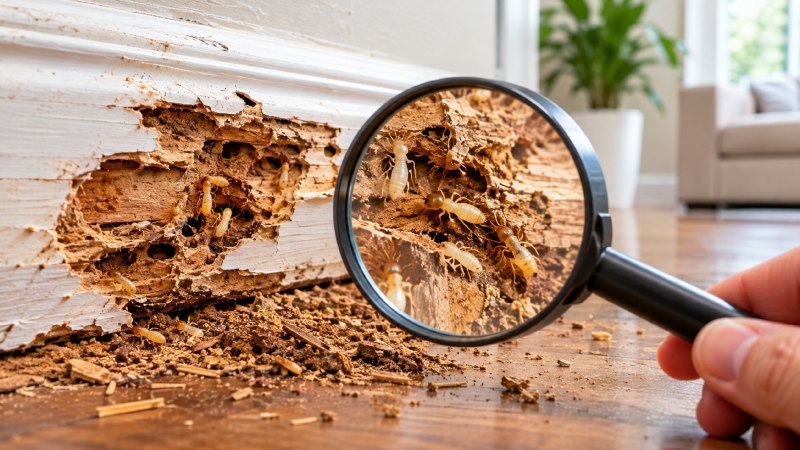
A small scatter of translucent wings on a windowsill can ruin a quiet Saturday. So can a baseboard that sounds oddly papery when bumped by the vacuum. Most people react in one of two ways: they brush the evidence away and hope, or they start tearing into the wall to see what is behind it. Both reactions can make the problem harder to diagnose. In Southern California, where mild weather keeps wood-feeding insects active for much of the year, the first few days after a suspicious find matter more than most homeowners expect. Calm, methodical steps protect both the evidence and the structure.
What Wings, Pellets, and Hollow Wood Usually Mean
Each warning sign points toward a different part of the termite life cycle. Discarded wings are left behind by swarmers, the reproductive termites that leave a mature colony to start new ones. After a short flight, they shed their wings and look for a place to settle, so a pile of identical, paper-thin wings near a window or door often means a swarm happened nearby or inside. Termite wings are roughly equal in length, which separates them from flying ants, whose front wings are noticeably larger than the back pair.
Small piles of pellets tell a different story. Drywood termites push their droppings out of tiny kick-out holes, leaving mounds that resemble coarse sand or ground coffee. Under magnification, the pellets are firm and ridged rather than powdery. Subterranean termites handle waste differently, which is why mud tubes along foundations and crawl space walls are the more common sign for that group.
Hollow-sounding wood comes last, and usually signals longer activity. Termites eat along the grain and leave a thin outer layer, so a tap with a screwdriver handle may sound dull or papery. Blistered paint, sagging trim, and doors that suddenly stick can all trace back to hidden tunneling. Any one of these signs deserves attention. Two or three together deserve it quickly.
Photographs and Notes That Help an Inspector Later
Documentation sounds like paperwork, but it is the cheapest useful step a homeowner can take. Evidence changes fast. Pellets get swept up, swarmers die within hours, and humidity alters how damaged wood looks. A record made on day one often answers questions that are impossible to reconstruct later.
Start with wide photos that show where the activity sits in the room, then move to close shots with a coin or ruler for scale. Flash photography flattens texture, so a flashlight held at an angle works better for showing pinholes and grooves. Short notes should capture the date, the time of day, whether windows were open, and anything recent, such as a leak, a remodel, or a delivery of firewood stacked against an exterior wall.
Physical samples are worth saving as well. A few wings or pellets sealed in a zip bag or taped to an index card give a technician something concrete to examine. If the signs appear near the roofline, a bathroom, or an exterior wall, note which one, since location often narrows the species. Homeowners who plan to call for Termite Control Anaheim can hand over this folder at the start of the visit and shorten the diagnostic process considerably.
Why Probing, Painting Over, and Spraying Make Things Harder
Curiosity is the enemy of good evidence. Prying off trim, drilling exploratory holes, or digging into a suspicious beam may feel like progress, yet it breaks open galleries and exposes the insects to air and light. Subterranean termites respond to a broken mud tube by rebuilding it, sometimes in a new spot that is harder to find. Disturbed drywood colonies may seal off the damaged area and continue feeding elsewhere in the structure.
Covering the damage creates the opposite problem. Caulk, wood filler, and fresh paint hide pellet holes and soften the visual clues that show how far activity extends. A cosmetic repair can also trap moisture, which feeds a separate set of wood-damaging organisms and muddies the picture further.
Store-bought sprays deserve special caution. Contact insecticides kill the few insects that happen to be exposed, but a colony lives mostly out of sight, often well beyond the visible damage. Treating the surface can scatter foragers and give a false sense that the issue is over. Once the evidence has been documented and left alone, the appropriate next step is a licensed inspection. Many Orange County homeowners search for a local termite inspection at this point, since a qualified inspector can examine attics, subareas, and framing with tools that casual homeowner checks simply do not match.
Getting a Proper Identification Before Any Repair
Identification drives every decision that follows. Drywood termites, subterranean termites, and dampwood termites differ in how they nest, how they spread, and which treatments reach them. A fix designed for one group can fail completely against another, which is why guessing from a photograph or a web search rarely holds up.
An inspector looks beyond the spot the homeowner found. Probing, moisture readings, and a methodical walk through the attic, garage, and foundation edge help reveal whether the activity is isolated or widespread. Inspectors also separate current infestations from old, inactive damage, an important distinction because wood that looks ruined may have been dry for years. Likewise, a harmless pest such as a wood-boring beetle can mimic termite damage, and misidentifying it leads to unnecessary expense.
Repairs belong at the end of this sequence. Replacing a rotted fascia board before the colony is addressed gives termites fresh wood and wastes the repair budget. Written findings should state the species, the extent of damage, and the recommended treatment approach. Homeowners who plan to sell, refinance, or file an insurance claim will also need that documentation, and a clear report prepared early spares them from scrambling when a deadline arrives.
A Practical First-Week Sequence
The first seven days go smoothly when the order of operations is clear. The steps below keep evidence intact while the situation gets professionally assessed:
- Stop and leave the area undisturbed, including vacuuming, sweeping, and sanding.
- Photograph the site from several distances and angles, and log the date.
- Collect a small sample of wings or pellets in a sealed bag.
- Fix any visible leaks or plumbing drips nearby, since moisture invites further trouble.
- Move stored wood, cardboard, and clutter away from the affected wall.
- Schedule a licensed inspection and share the photos and notes.
Small habits also help during the wait. Turning off exterior lights near the affected area for a few nights can reduce attraction for nighttime swarmers, and keeping gutters clear limits damp spots near the roofline. None of this replaces treatment, but it keeps conditions from getting worse while the diagnosis is pending.
Final Analysis
Spotting a possible termite sign is stressful, though it rarely requires panic. The strongest response is the plainest one: observe, record, avoid disturbing the area, and get a proper identification before spending money on repairs. Wings, pellets, hollow wood, and unexplained trim damage each tell part of a story, and an inspector can read the whole thing in a way a single clue cannot. Homeowners in Anaheim who treat the first discovery as evidence to preserve, rather than a nuisance to erase, usually end up with faster answers, more accurate treatment, and a cleaner path to repairs that last.