
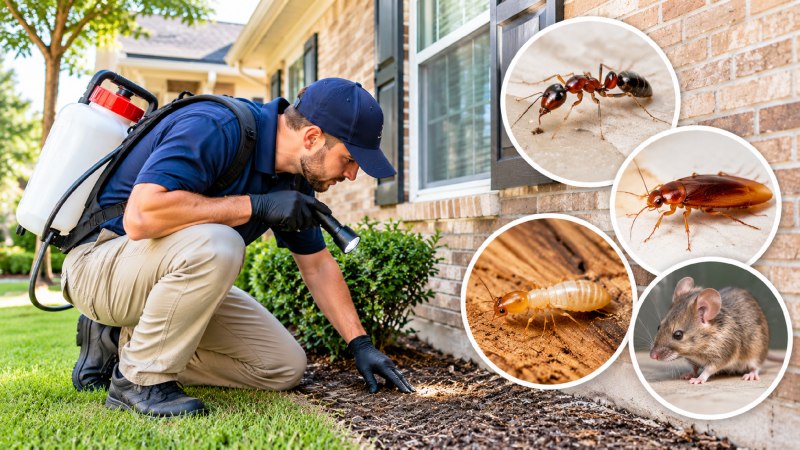
A single ant trail on the counter is an annoyance. The same trail returning every week, despite spray and cleaning, is information. Houston’s heat, humidity, and heavy rainfall keep insects and rodents active far longer than in cooler regions, and the city’s sprawling neighborhoods, bayou-adjacent lots, and older housing stock give pests many ways inside. Most homeowners can manage an occasional visitor. The difficult part is recognizing the point where effort at home stops producing results. A few clear patterns signal that it has arrived.
Infestations That Keep Coming Back
Recurrence is the strongest sign that a problem has a source the homeowner has not found. Pests rarely return by chance. Cockroaches reappear because a harborage sits behind a dishwasher or inside a wall void. Ants come back because a satellite nest survived. Rodents return because the entry point never got sealed.
A useful rule is to track timing. If a pest vanishes for a few days after treatment and then reappears in the same spot, the treatment probably reached only the visible insects. Houston’s climate makes this worse, since warm, damp conditions allow populations to rebuild in weeks rather than months. A colony that loses a few foragers can replace them quickly.
Keeping a simple log helps. Write down dates, locations, and what was tried. After the second or third round with similar results, the pattern itself becomes the case for a professional inspection, because someone trained to trace pests back to their source can usually find in an hour what a household missed over several weeks.
Pests That Cannot Be Identified With Confidence
Identification shapes every decision, and guessing can waste months. Many insects resemble one another. Termite swarmers look like flying ants, and several small beetles look alike to casual observers. Treating the wrong species with the wrong product does little, and some sprays scatter colonies into new parts of the house.
Houston adds its own complications, including multiple termite types, several cockroach species, fire ants, and a range of invasive ants that behave differently from native ones. Each responds to different baits and methods. A product that controls one may repel another and make the situation worse.
If a photo search leaves doubt, that doubt is reason enough to ask for help. Saving a few specimens in a sealed container gives a technician something concrete to examine. Professionals can often confirm the species within minutes, then explain its habits, its likely nesting areas, and why it chose that particular home.
Structural Damage and Activity Across Multiple Areas
Damage changes the stakes. Hollow-sounding baseboards, bubbling paint, sagging trim, chewed wiring, or soft wood near a leak point toward pests that harm the structure itself. Termites, carpenter ants, and rodents can all do so quietly for a long time. Because repairs are expensive and some damage affects safety, waiting for obvious collapse is a poor strategy.
Spread matters as much as severity. Pests found in a single cabinet may be a local issue. Pests turning up in the kitchen, a bathroom, the garage, and an upstairs bedroom suggest an established population moving through shared voids, plumbing chases, or attic space. Treating each room separately rarely works, since the animals simply relocate.
Homeowners comparing providers often look for a company with local experience, and Reliant Pest Management serving Houston is one example of a regional provider offering inspections for this kind of multi-area activity. Whichever company is chosen, the inspection should cover attics, crawl spaces, and the exterior perimeter rather than only the room where the pest was last seen.
When DIY Treatment Stops Working
Store-bought products have a legitimate place. Baits, traps, and exclusion materials solve many small, early problems. Their limit is reach. A can of spray kills what it touches, while most colonies live out of sight in walls, soil, or attic insulation. A surface treatment can create a false sense of progress by thinning visible activity while the source remains untouched.
Several warning signs suggest the do-it-yourself approach has run its course:
- The same pest returns within weeks of treatment.
- Activity moves to new rooms after spraying.
- More than one product has been tried without lasting results.
- Damage appears in wood, wiring, or insulation.
- Family members have health concerns, such as allergies, bites, or contamination of food areas.
There is also a safety dimension. Overapplying chemicals indoors can expose children and pets to residues, and misusing rodent poison can lead to dead animals inside walls. A licensed technician uses targeted products, follows label limits, and can often choose methods that minimize exposure.
What to Expect From a Professional Visit
Knowing what a good inspection looks like helps homeowners judge quality. A technician should ask about the history of the problem, including when it started, where it appears, and what has already been tried. A thorough visit then covers the interior, the attic or crawl space, and the property’s exterior, including drainage, vegetation, and potential entry points.
The findings should be explained plainly. A useful report names the pest, describes the likely cause, and lays out a treatment plan with realistic follow-up. Moisture, clutter, and gaps in the building envelope often contribute, so the plan may include recommendations for the homeowner, such as fixing leaks or trimming plants away from the roofline.
Follow-up deserves attention too. Reputable providers expect to recheck progress, since many pests need more than one visit. Homeowners should ask about service intervals, what is covered if activity returns, and how long results typically last. Written documentation also helps later if the home is sold or insured.
Final Analysis
Escalating to professional help is not an admission of failure. It is a practical response to specific signals: repeated infestations, uncertain identification, structural damage, activity in several areas, and treatments that stop working. Houston’s climate rewards pests with fast reproduction, so delay tends to cost more than early action. Homeowners who track what they see, resist the urge to keep trying new products, and request a thorough inspection when patterns persist are far more likely to reach a lasting solution.