
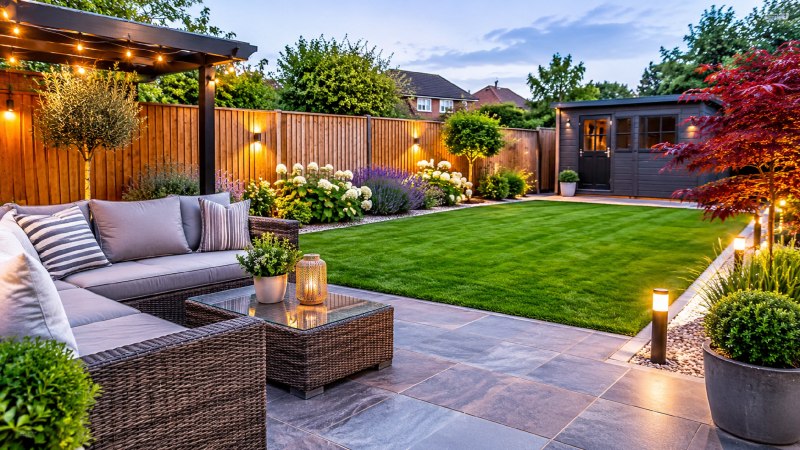
Somewhere between buying a house and turning 40, most of us accept that we’ll spend every other weekend hunched over our flowerbeds and pulling out weeds.
But a growing number of homeowners have decided they’d rather enjoy the sunshine than spend every warm weekend behind a lawn mower.
The shift towards low-maintenance garden designs has been building for years, and in 2026, it’s properly taken hold. So, if you’re tired of playing unpaid groundskeeper every Saturday, here’s what the trend looks like.
Easy-Care Plants
Maintaining your garden doesn’t have to feel like a full-time job. The trick is choosing plants that look after themselves rather than ones that demand your attention every other day.
- Hardy perennials. Staples like lavender, hardy geraniums, and echinacea come back year after year without being replanted.
- Evergreens and ornamental grasses. Ornamental grasses add instant movement with zero effort, while evergreen shrubs keep your borders full even in the middle of January.
- Drought-tolerant varieties. Our summers keep getting warmer, and hosepipe bans are practically an annual tradition now. To avoid the worst of it, opt for plants like sedum, euphorbia, and rosemary, which thrive in dry soil.
These plants don’t ask for much once they’re established. That means you can spend less time weeding, watering, and pruning, and more time putting your feet up and enjoying your garden.
Lawn Alternatives
If your lawn-care routine feels like a never-ending commitment, you’re not imagining things. Between mowing, feeding, weeding, and aerating, a traditional lawn requires more time and effort than most people are willing to give.
That’s why so many homeowners are shrinking their lawns or swapping sections for less demanding alternatives. Gravel gardens, wildflower patches, and ground cover plants like creeping thyme all look brilliant without a weekly trim.
Artificial grass has also become popular, especially in smaller urban gardens where natural grass struggles to establish itself. It isn’t everyone’s first choice, but it can save you from constantly reseeding the same stubborn bare patches.
And if you can’t quite let go of your lawn entirely, reducing it to a smaller section surrounded by borders or hardscaping can cut your maintenance time in half.
Durable Hardscaping
After simplifying your planting scheme, you’ll probably notice the rest of the elements in your garden a lot more.
Composite decking has become especially popular because it doesn’t rot, warp, or need re-staining every summer. For anyone who values their weekends, this puts it ahead of traditional timber.
You can also use decorative aggregates and natural stone to give your borders and pathways more texture without adding to your maintenance list.
They suppress weeds and look presentable all year round, which is a combination that traditional plants struggle to match.
The upfront cost can feel steep. But when you factor in years of saved time and bags of compost you’d otherwise be hauling back from B&Q, it’ll start to look like a sensible trade-off.
Automated Maintenance
Technology has made its way into our gardens, taking care of many of the jobs we’d rather avoid. After all, why sweat through routine chores when you can let smart gadgets handle the heavy lifting?
Modern robot mowers can crisscross your lawn on a set schedule, dodging toys, edging borders, and returning to their charging docks without supervision. They’re also much quieter than petrol models, which your neighbours will thank you for.
Smart irrigation systems are gaining ground, too. They use weather data and soil sensors to water your plants only when the moisture content in the soil is low.
These tools won’t replace your care routine entirely, but they can deal with the repetitive tasks that eat into your evenings and weekends.
Space Optimisation
Gardens have a habit of collecting features over the years, and not all of them deserve to stay. That narrow strip of gravel down the side of the house, the raised bed nobody plants, and the decorative arch all take up valuable space.
That’s why more homeowners are simplifying their layouts. Instead of squeezing in as many features as possible, they’re removing anything that creates unnecessary work and replacing it with clean, practical designs that are easier to maintain.
Just think about it. One well-proportioned patio often works better than several small furnished areas competing for space. Likewise, straightening out awkward borders makes mowing, edging, and weeding much quicker.
Even small changes can make a noticeable difference. Removing a feature you never use or combining two cramped borders into one larger planting area can make your garden feel bigger.
How to Create a Low-Maintenance Garden
You don’t have to tear everything out and start from scratch. A few targeted changes can significantly slash your workload. Here are a few tips you can try out.
Choose the Right Plants
If you pick plants that suit your garden’s soil type and climate, they’ll establish faster and need less babysitting.
A sun-loving perennial shoved into a cold, soggy, north-facing border will suffer no matter how much you fuss over it. So, put shade-lovers like ferns, hostas, and hellebores in the dark spots, and save the lavender for the sunny patches.
Reduce High-Maintenance Areas
Take a look around your garden and ask yourself which areas create the most work. More often than not, it’s the oversized lawn or the flowerbeds that need replanting every spring.
Replacing those sections with gravel, ground cover, or a simple evergreen border can free up hours for you every month without making your space feel neglected.
Let Technology Do the Hard Work
If mowing and watering are the tasks you dread most, a robot mower and a smart irrigation system will handle both on autopilot. Setting them up will take an afternoon, and after that, they’ll run themselves.
For anything more involved, professional garden improvement services can help you plan and install a setup that works long-term.
Plan for Long-Term Maintenance
It’s easy to focus on how your garden will look when everything is freshly planted, but it’s worth thinking about what it’ll look like five years from now, too.
So, give plants enough room to mature, choose materials that weather well, and avoid features that constantly need replacing or repairing.
Trust us, a bit of planning now can save you from major headaches later. After all, redesigning an overcrowded border or replacing worn-out materials usually takes more time and money than getting it right the first time.
Conclusion
Your garden should be the place where you unwind, not the reason you need to. And with a few smart choices, you can have an outdoor space that looks brilliant all year without demanding every spare moment.
So, make the changes that suit your space, put your feet up, and let nature do the rest!